Billy Hughes, Jr. was part of a Hollywood family influenced by horses, stunt work, Westerns, television, and an extraordinary affinity to filmmaking’s physical side. Billy Jr. was born in Los Angeles, California, on November 28, 1948, and began acting as a child. He became famous in American Westerns.
Though brief, his career was hectic. He appeared on Gunsmoke, The Rifleman, Lassie, Wagon Train, The Detectives, and Shirley Temple’s Storybook in the early 1960s. His stunt career followed his feature picture work.
An experienced Hollywood family supported Billy’s career. Billy E. Hughes Sr. was a stuntman, actor, and producer. His uncle, Robert “Whitey” Hughes, was a talented stuntman.
Billy Jr.’s narrative goes beyond a young actor’s. It shows a family enterprise that requires guts, physical expertise, and the ability to make risky scenes look easy.
Billy Hughes Jr and His Early Hollywood Years
Billy Hughes Jr. was born into the entertainment industry in Los Angeles, but his family background reached back to Oklahoma. His father and uncle came from Arkoma, Oklahoma, where horsemanship and practical farm skills were part of everyday life.
Those skills later became valuable in Hollywood.
Billy began appearing on television around the late 1950s or very early 1960s. His timing was fortunate. Television Westerns were everywhere, and young performers could build careers by appearing in individual episodes rather than relying on a single long-running series.
Billy proved particularly suited to these productions. He could play ordinary children, troubled youngsters, and boys caught in dangerous situations. His performances often placed him in the middle of stories involving families, frontier life, revenge, or adventure.
Among his early television credits was The Detectives, where he played Bobby Marx. He also appeared in Shirley Temple’s Storybook, Lassie, Dr. Kildare, 77 Sunset Strip, Dennis the Menace, Laramie, General Electric Theater, and Arrest and Trial.
The list gives a sense of how active he was. Rather than belonging to one particular program, Billy moved from set to set, becoming part of the enormous network of young television performers working in Hollywood.
Billy Hughes Jr on The Rifleman
One of Billy Hughes Jr.’s most memorable television connections was The Rifleman.
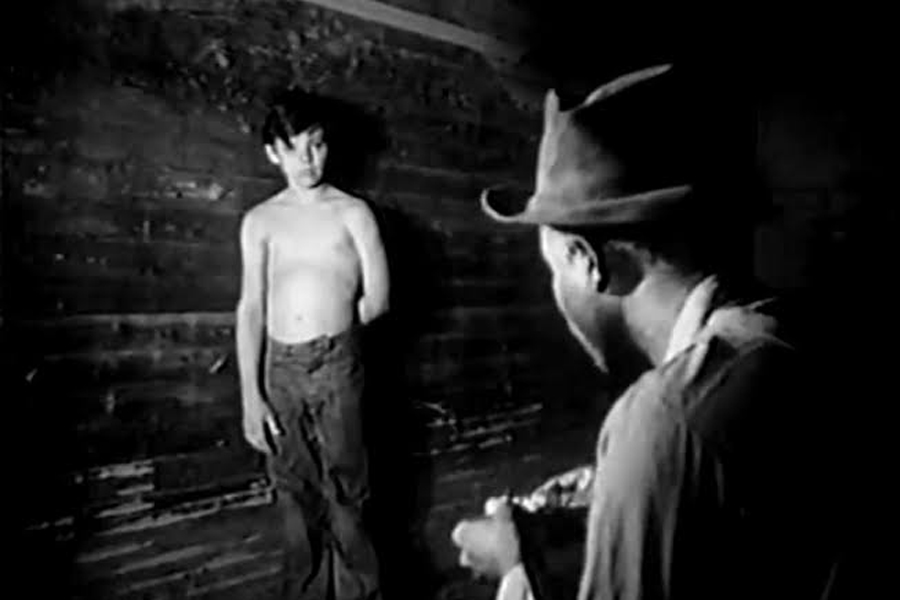
He appeared in three episodes, taking different roles that included Jeffrey Waller, Aaron Jamison, and Gridley Maule Jr. His performance as the 13-year-old Gridley Maule Jr. in “The Sidewinder” stands out because the character was driven by a desire for revenge after his father’s death.
Billy was reportedly especially fond of this role. The part allowed him to play a young character with considerably more emotional weight than the typical child role.
His work also reflected the physical demands of Western television. Billy was noted for his ability to handle a Colt revolver convincingly at a young age. In an era when Westerns depended heavily on horseback riding, gun handling, fistfights, falls, and outdoor action, such abilities could make a young performer particularly useful.
Billy Hughes Jr and Gunsmoke
Billy also appeared in Gunsmoke three times, playing Joey Glover, Timmy in “Us Haggens,” and Tommy.
The repeated appearances illustrate how child actors could become familiar faces within television’s Western circuit. An actor might play one character in one season and return later as an entirely different character.
For Billy, Gunsmoke was one part of a larger television career that included several major Western productions. His credits on Wagon Train, Lassie, and The Rifleman placed him firmly within the television landscape of the early 1960s.
Billy Hughes Jr in Feature Films
Billy’s film career included several notable appearances.
In Ole Rex in 1961, he played a runaway boy. The film was produced by his father, giving Billy an opportunity to work within a production connected directly to his family.
That same year, he appeared in Posse from Hell as Jackie Hutchins, although the role was uncredited.
In 1962, Billy appeared in Stakeout! as Joey Dasco Jr. Again, his father was involved as producer.
One of his more recognizable film appearances came in My Six Loves in 1963, where he played Leo opposite Debbie Reynolds. The film gave Billy an opportunity to work beyond the Western genre and alongside an established Hollywood star.
His later film credits included Smoke in the Wind in 1975, where he played Till Mondier and was billed as Billy Hughes Jr. The production was another family connection, with his father involved in producing the picture.
From Child Actor to Stunt Performer
Billy’s transition toward stunt work was a natural development.
His father and uncle had already built careers around physical performance. Growing up around people who rode horses, performed falls, worked around action sequences, and understood the mechanics of filmmaking gave Billy an unusual education.
He received uncredited stunt credits in productions including The Glory Guys in 1965 and The Wild Bunch in 1969.
His acting career and stunt work therefore overlapped. He was not simply a former child actor who happened to try stunts later. Stunt performance was already part of his family’s professional identity.
His final known credited appearance was in the educational children’s series Letter People in 1978, where he appeared in “Meet Mister V.”
Billy Hughes Sr the Father Behind the Family Connection
Billy E. Hughes Sr., also known as Bill Hughes or William Hughes Sr., was born on November 26, 1927, in Arkoma, Oklahoma.
He became a stuntman, actor, and producer. His acting credits included The Amazing Colossal Man in 1957, while his production work included Stakeout! and Smoke in the Wind.
His career illustrates the broader Hughes family approach to Hollywood. The family was not confined to one job. They could act, perform stunts, produce films, ride horses, and handle the practical demands of location filmmaking.
Billy Sr. died on October 13, 2002, in Van Buren, Arkansas, at the age of 74.
The connection between father and son extended beyond their personal relationship. They also shared professional territory, with Billy Jr. appearing in productions connected to his father’s work.
Robert Whitey Hughes and His Extraordinary Stunt Career
Billy Jr.’s uncle Robert “Whitey” Hughes was possibly the family’s most documented Hollywood professional.
On November 9, 1920, in Arkoma, Oklahoma, Whitey was born with agricultural qualities that subsequently helped him in movies. The Hughes family migrated to California in 1936, when Whitey was 16.
His 5-foot-6-inch height ended up being an asset. Early in his career, he often doubled for women, showing how stunt performers might use stature and movement to imitate diverse actors.
He doubled for Reno Browne and later worked with Rita Hayworth, Stephanie Powers, Barbara Hershey, Anne Baxter, Lana Turner, Kathleen Crowley, and Virginia Mayo.
He could accomplish much more than double. Whitey was a skilled horseman, driver, pilot, and motorcyclist. He worked on Westerns, TV, action pictures, and complicated physical sequences.
Later, he worked with Sam Peckinpah and coordinated stunts for The Wild Wild West.
Whitey Hughes and The Wild Wild West
Whitey Hughes played an important role in the physical identity of The Wild Wild West, which ran from 1965 into the late 1960s.
As stunt coordinator, he helped organize elaborate fights, falls, chases, and action sequences. He worked closely with Robert Conrad, whose character frequently became involved in spectacular physical confrontations.
Whitey also appeared in the program in various acting and stunt roles.
The series demanded precision. A stunt might last only a few seconds on screen, yet it could require extensive preparation and coordination. Whitey’s job was to turn those dangerous moments into controlled pieces of screen action.
His work with the show became one of the defining chapters of his long career.
Whitey Hughes and Sam Peckinpah
Whitey’s professional relationship with Sam Peckinpah further established his reputation in action filmmaking.
He worked on films including Major Dundee and The Wild Bunch. His responsibilities could include performing stunts, coordinating action, wrangling horses, and taking small acting roles.
Later work included stunt coordination on Bring Me the Head of Alfredo Garcia and The Killer Elite.
Whitey’s career continued well beyond the classic Western period. He worked on productions such as Kingdom of the Spiders, The Stunt Man, Biloxi Blues, Bill & Ted’s Excellent Adventure, Men in Black, and BASEketball.
His career stretched across changing generations of Hollywood filmmaking.
Billy Hughes Jr and His Family Life
Billy Jr. married Aida Hughes in 1969. The couple remained together until his death.
They had one son, William Hughes III, and the family eventually included four grandchildren. Unlike many former child performers, Billy largely disappeared from public attention after his Hollywood years.
The family later lived in Arkansas, away from the spotlight that had surrounded Billy during childhood.
Public information about his mother and some other aspects of his private life is limited. A family record also identifies a sister, Christina Hughes, who was born and died in 1947.
This limited public record is important because Billy’s later life should not be filled with assumptions. Much of what happened after his acting career remains private.
Billy Hughes Jr and the Move Away From Hollywood
Billy eventually left the Hollywood environment and returned to Arkansas.
Accounts of his life indicate that family issues contributed to his decision to leave the entertainment business. He reportedly made later attempts to return to Hollywood, including efforts connected with writing, but those efforts did not develop into another sustained career.
By then, the television Western era that had helped launch him was changing. The industry was also moving toward different kinds of programming, while many former child actors struggled to establish comparable adult careers.
Billy chose a quieter path.
There is no substantial public record of major wealth, extensive business holdings, or continuing entertainment income. His later years were lived largely outside public view.
Billy Hughes Jr Death in Arkansas
Billy Eugene Hughes Jr. died on December 20, 2005, in Alma, Arkansas. He was 57 years old.
He reportedly died in his sleep. No specific cause of death was publicly released.
He was cremated, and the location of his ashes has not been publicly established.
His death marked the end of a life that had begun in Los Angeles surrounded by Hollywood professionals and ended quietly in Arkansas.
The Hughes Family Legacy
I see a family trend in Billy Hughes Jr.’s career and his father and uncle’s.
The Hughes family recognized Hollywood’s body language.
Billy Sr. stunted, acted, and produced. Whitey was a decades-long stuntman and coordinator. Billy Jr. was influenced by that legacy through acting and stunts.
Their professions reflect a certain American entertainment era. Westerns were not just another genre in the 1950s and 1960s. They dominated television culture, demanding riders, stuntmen, actors, wranglers, and young entertainers.
The Hugheses fit that world.
From Oklahoma, they learned practical skills. Opportunity came from California. Hollywood provided the stage.
Billy Hughes Jr Career at a Glance
| Year | Career or Family Event |
|---|---|
| 1948 | Billy Eugene Hughes Jr. is born in Los Angeles |
| 1950s | Begins moving toward television acting |
| 1960 | Appears in early television productions |
| 1961 | Appears in Ole Rex and Posse from Hell |
| 1962 | Appears in Stakeout! |
| 1963 | Appears in My Six Loves |
| 1965 | Receives uncredited stunt credit on The Glory Guys |
| 1969 | Marries Aida Hughes and later works on The Wild Bunch as an uncredited stunt performer |
| 1975 | Appears in Smoke in the Wind |
| 1978 | Makes his final known credited appearance in Letter People |
| 2002 | Father Billy Hughes Sr. dies in Arkansas |
| 2005 | Billy Hughes Jr. dies in Alma, Arkansas |
Frequently Asked Questions
Who was Billy Hughes Jr?
Billy Hughes Jr. was an American child actor and occasional stunt performer born in Los Angeles on November 28, 1948. He became known for guest appearances in television Westerns and family programs during the early 1960s.
What was Billy Hughes Jr best known for?
He was best known for appearances in programs such as The Rifleman, Gunsmoke, Lassie, and Wagon Train. His role as Gridley Maule Jr. in The Rifleman episode “The Sidewinder” is among his more memorable performances.
Who was Billy Hughes Jr’s father?
His father was Billy E. Hughes Sr., also known as Bill Hughes or William Hughes Sr. He worked as a stuntman, actor, and producer and was involved in productions including Stakeout! and Smoke in the Wind.
Who was Whitey Hughes?
Robert “Whitey” Hughes was Billy Hughes Jr.’s uncle. He was a prolific Hollywood stuntman, actor, stunt coordinator, and occasional producer whose career extended from the late 1940s into the 1990s.
What was Whitey Hughes known for?
Whitey Hughes was particularly known for Western and action work, exceptional horsemanship, stunt doubling, and stunt coordination. He worked on The Wild Wild West, several Sam Peckinpah productions, and numerous films and television programs.
Was Billy Hughes Jr married?
Yes. Billy Hughes Jr. married Aida Hughes in 1969. They remained married until his death in 2005.
Did Billy Hughes Jr have children?
Yes. Billy Jr. and Aida had one son, William Hughes III. The family later included four grandchildren.
When did Billy Hughes Jr die?
Billy Hughes Jr. died on December 20, 2005, in Alma, Arkansas. He was 57 years old.
What was Billy Hughes Jr’s cause of death?
A specific cause of death was not publicly released. He was reported to have died in his sleep.
Where was Billy Hughes Jr buried?
Billy Hughes Jr. was cremated. The location of his ashes is not publicly known.
Did Billy Hughes Jr continue acting as an adult?
His major acting period was concentrated in childhood and adolescence, particularly during the early 1960s. He had later credits, including Smoke in the Wind in 1975 and Letter People in 1978, but he did not develop a long-running adult acting career.
How was Billy Hughes Jr connected to stunt work?
He grew up in a stunt family through his father and uncle. He later received uncredited stunt credits, including work associated with The Glory Guys and The Wild Bunch.
How long did Whitey Hughes work in Hollywood?
Whitey Hughes had a career lasting roughly six decades, beginning around the late 1940s and continuing into the late 1990s. He remained involved in stunt performance and coordination across several generations of film and television.
What made the Hughes family unusual in Hollywood?
The family combined acting, stunt performance, horse handling, action coordination, and film production. Billy Jr. entered the industry as an actor, while his father and uncle established themselves through both performance and behind-the-scenes physical production work. Their careers form a small but vivid thread through the history of American Westerns and television action.