Bea Arthur Marine and Her Early Life
Bea Arthur, born Bernice Frankel on May 13, 1922, became one of the most distinctive American actresses of the twentieth century. Known for her commanding presence, deep voice, dry wit, and sharp comic timing, she created unforgettable television characters including Maude Findlay on Maude and Dorothy Zbornak on The Golden Girls. Yet before Broadway lights and television fame, she had already taken on an extraordinary role as a United States Marine.
Arthur was born in Brooklyn, New York City, to Jewish immigrant parents Philip Frankel and Rebecca Frankel, née Pressner. Her father had immigrated from Poland, while her mother had come from Austria. The family later moved to Cambridge, Maryland, around 1933 after financial difficulties affected her father’s business. There, her parents operated a women’s clothing store and raised three daughters.
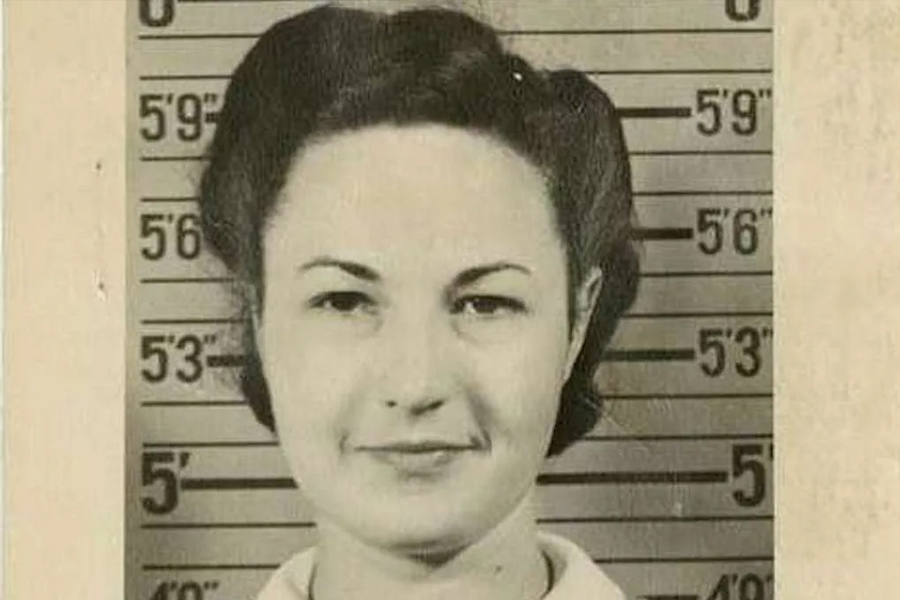
Arthur grew into a tall, striking young woman, standing approximately 5 feet 9 and a half inches to 5 feet 10 inches. Her unusual height and resonant voice eventually became part of her artistic identity. As a young woman, however, her path did not immediately point toward Hollywood or Broadway. She briefly attended Blackstone College, trained as a medical laboratory technician, and worked in food analysis and laboratory-related positions.
The turning point came during World War II.
Bea Arthur Marine Corps Service During World War II
Arthur joined the Marine Corps Women’s Reserve days after its founding in February 1943. One of the first women to join the Marines during the conflict.
Bernice Frankel was her official name. She needed parental consent under 21. Her enlistment form shows a young woman ready to contribute and willing to take any task. She initially liked ground aviation but would serve wherever needed.
Her civilian jobs included food analyst, hospital lab technician, and office worker. She was a civilian air raid warden. Her hobbies were remarkably varied. Piano, organ, dramatics, reading, sailing, archery, and.22 rifle hunting were her hobbies.
Arthur finished basic training at Hunter College, NY. She typed at Marine Corps Headquarters in Washington, D.C., during her early Marine career. She wanted more involvement.
She requested transfer to Camp Lejeune Motor Transport School in 1943. She finished motor mechanics and transportation courses once her request was granted. She became Marine Corps Air Station Cherry Point’s driver and dispatcher.
Her military career progressed quickly:
| Year | Military milestone |
|---|---|
| 1943 | Enlisted in the Marine Corps Women’s Reserve |
| May 1943 | Promoted to Private First Class |
| August 1943 | Promoted to Corporal |
| December 1943 | Promoted to Sergeant |
| 1944 to 1945 | Served primarily as driver and dispatcher |
| 1945 | Reached Staff Sergeant |
| September 26, 1945 | Honorably discharged |
She ultimately served approximately 30 months and left the Marines as a Staff Sergeant. Her decorations included the American Campaign Medal and World War II Victory Medal.
One of the most fascinating aspects of Arthur’s military record is the personality description written during her early service. She was characterized as frank, open, argumentative, and highly assertive. The assessment even suggested that she could be a good worker when allowed to have things her own way.
Decades later, audiences would recognize echoes of that personality in the tough, intelligent women she played on television.
Marriage to Robert Alan Aurthur
Arthur’s first marriage took place during her Marine service. On February 17, 1944, she married fellow Marine Robert Alan Aurthur.
Robert later became a screenwriter, producer, and director. The marriage did not last long after the war, ending in divorce sometime between the late 1940s and around 1950. Arthur retained the surname, although she eventually modified its spelling for her professional career.
This small change helped create the name by which millions of viewers would eventually know her: Bea Arthur.
Her Marine records also preserve the transition from Bernice Frankel to Bernice Aurthur. The documents provide an unusually detailed glimpse into a chapter of her life that Arthur herself later treated with considerable privacy.
Bea Arthur and Gene Saks
Arthur married Gene Saks in 1950. Two New York theater hopefuls met through their friendship.
Saks became a famous Broadway and film director, specializing in Neil Simon adaptations. Arthur was directed by him in Mame, one of her greatest plays.
Matthew and Daniel were Arthur and Saks’ adopted sons. Their 1978 divorce ended their nearly 30-year marriage.
Arthur later spoke ambivalently about marriage, and her personal life was far more private than her public profession. The difference was remarkable. She could fill a theater with one line. Without the spotlight, she liked privacy.
Her Sons Matthew Saks and Daniel Saks
Arthur’s family legacy continued through her two adopted sons.
Matthew Saks
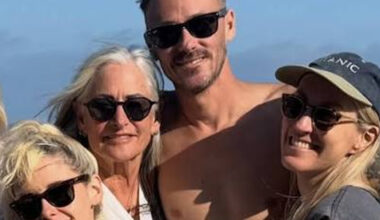
Matthew Saks was born on July 14, 1961. He followed his mother into the entertainment industry and worked as an actor.
His credits included appearances in The Golden Girls, Robin Hood: Men in Tights, and A Few Good Men. His appearance on The Golden Girls was particularly memorable because it placed him in the same television world that had become central to his mother’s career.
Matthew’s work created a subtle family connection between Arthur’s personal and professional lives.
Daniel Saks
Daniel Saks was born on May 8, 1964. Rather than pursuing acting like his mother and brother, he developed a career behind the camera as a set and production designer.
His professional credits have included work on television programs such as How I Met Your Mother, Babylon 5, Dharma & Greg, and The Orville.
Together, Matthew and Daniel represent two different branches of the entertainment world. One worked in front of the camera, while the other helped construct the visual environments behind it.
From Marine to Broadway Star
After leaving the Marines, Arthur studied at the New School’s Dramatic Workshop under Erwin Piscator. Her classmates and associates included future stars such as Walter Matthau and Tony Curtis.
Her theater career developed steadily during the 1950s and 1960s. She appeared in the long-running off-Broadway production The Threepenny Opera in 1954 and later originated the role of Yente the Matchmaker in Fiddler on the Roof in 1964.
Her major Broadway breakthrough came with Mame. Playing Vera Charles, Arthur demonstrated the combination of comedy, timing, voice, and physical presence that would become her signature. She won the Tony Award for Best Featured Actress in a Musical in 1966.
The stage was now hers.
Maude Findlay Changes Television
Arthur first appeared as Maude Findlay on All in the Family in 1971. The character proved so popular that she received her own series, Maude, beginning in 1972.
Maude was outspoken, politically engaged, independent, and unwilling to quietly accept conventional expectations. The series addressed subjects including abortion, menopause, alcoholism, marriage, aging, and changing social values.
Arthur’s performance earned her an Emmy Award for Outstanding Lead Actress in a Comedy Series in 1977.
Her role was more than a sitcom performance. Maude became a vehicle through which American television could place complicated adult women at the center of difficult conversations.
Dorothy Zbornak and The Golden Girls
In 1985, Arthur took on another defining role: Dorothy Zbornak on The Golden Girls.
Dorothy was intelligent, sarcastic, direct, and frequently exasperated by the eccentric behavior of her roommates Blanche, Rose, and her mother Sophia. Arthur’s deep voice and precise delivery gave Dorothy a distinctive rhythm.
The series ran from 1985 to 1992 and became one of television’s enduring cultural landmarks. Arthur won an Emmy for the role in 1988.
For me, the remarkable thread connecting Dorothy to Arthur’s earlier life is her refusal to disappear into the background. Whether wearing a Marine uniform, standing on a Broadway stage, or sitting around a Miami kitchen table, Arthur projected the same unmistakable sense of presence.
Bea Arthur’s Family Values and Later Legacy
Arthur kept her family and personal life discreet. She advocated animal welfare, AIDS research, women’s rights, and LGBTQ rights.
Her LGBTQ advocacy grew more prominent after her passing. New York’s Ali Forney Center, which helps homeless LGBTQ adolescents, received $300,000 in her estate. Her name was later given to an organization housing.
Arthur, 86, died of cancer in her Brentwood, Los Angeles home on April 25, 2009.
She had two sons, Matthew and Daniel, and two grandchildren, Kyra and Violet. Her children inherited most of her estate, and her philanthropic gift added to it.
Her military history became more apparent after her death. The revelation of her military personnel records documented a chapter she rarely discussed. Arthur went from a famous actress to a lady who served her nation during a key time in American history because to the records.
Bea Arthur Marine Service and Family Legacy at a Glance
| Category | Details |
|---|---|
| Birth name | Bernice Frankel |
| Professional name | Bea Arthur |
| Born | May 13, 1922 |
| Birthplace | Brooklyn, New York City |
| Parents | Philip Frankel and Rebecca Frankel |
| First husband | Robert Alan Aurthur |
| Second husband | Gene Saks |
| Sons | Matthew Saks and Daniel Saks |
| Military branch | U.S. Marine Corps |
| Military organization | Marine Corps Women’s Reserve |
| Enlistment | February 1943 |
| Final rank | Staff Sergeant |
| Discharge | September 26, 1945 |
| Major stage role | Vera Charles in Mame |
| Major television roles | Maude Findlay and Dorothy Zbornak |
| Tony Award | 1966 |
| Emmy Awards | 1977 and 1988 |
| Died | April 25, 2009 |
| Age at death | 86 |
FAQ
Who was Bea Arthur Marine?
Bea Arthur was an American actress, comedian, singer, and former U.S. Marine. Born Bernice Frankel, she served in the Marine Corps Women’s Reserve during World War II before becoming a Broadway and television star.
What was Bea Arthur’s rank in the Marines?
Arthur reached the rank of Staff Sergeant before receiving an honorable discharge on September 26, 1945.
When did Bea Arthur join the Marines?
She enlisted in February 1943, shortly after the Marine Corps Women’s Reserve was established.
What did Bea Arthur do in the Marines?
Arthur initially worked as a typist at Marine Corps Headquarters in Washington, D.C. She later trained in motor transport and served primarily as a driver and dispatcher at Marine Corps Air Station Cherry Point in North Carolina.
Who were Bea Arthur’s parents?
Her parents were Philip Frankel, an immigrant from Poland, and Rebecca Frankel, née Pressner, who immigrated from Austria. They raised three daughters in a Jewish household.
Did Bea Arthur have siblings?
Yes. She had two sisters, an older sister named Gertrude and a younger sister named Marian, who lived from 1926 to 2014.
Who was Bea Arthur’s first husband?
Her first husband was Robert Alan Aurthur, a fellow Marine who later became a screenwriter, producer, and director. They married in 1944 during their military service.
Who was Bea Arthur’s second husband?
Her second husband was Gene Saks, an actor and Broadway and film director. They married on May 28, 1950, and later adopted two sons.
How many children did Bea Arthur have?
Bea Arthur had two adopted sons with Gene Saks, Matthew Saks and Daniel Saks.
What did Matthew Saks do?
Matthew Saks became an actor. His credits include The Golden Girls, Robin Hood: Men in Tights, and A Few Good Men.
What did Daniel Saks do?
Daniel Saks developed a career in set and production design. His television credits include How I Met Your Mother, Babylon 5, Dharma & Greg, and The Orville.
What was Bea Arthur’s most famous television role?
Arthur is best known for playing Maude Findlay on Maude and Dorothy Zbornak on The Golden Girls. Both roles became defining performances in American television comedy.
What awards did Bea Arthur win?
Arthur won a Tony Award for her performance in Mame in 1966 and Emmy Awards for Maude in 1977 and The Golden Girls in 1988. She was also inducted into the Television Academy Hall of Fame in 2008.
How did Bea Arthur’s Marine experience influence her legacy?
Her Marine service added an important dimension to her biography. She served for roughly 30 months during World War II, advanced to Staff Sergeant, and performed transportation and dispatch duties. The assertive personality described in her early military records also bears an interesting resemblance to the forceful women she later portrayed on television.