Even though Norman John Macleod only lived for a little over two years, his tragedy is still among the most tragic in his family’s history. I don’t perceive a lost historical detail when I consider his life. I see a young child whose brief life was shaped by love, strife, disease, and the unpredictability of Dutch East Indies colonial life. His life is inextricably linked to those of his parents, particularly his mother, Margaretha Geertruida Zelle, who went on to become well-known throughout the world as Mata Hari.
Despite leaving no writings, accomplishments, or public legacy of his own, Norman John Macleod’s life sheds light on the intensely personal tragedy concealed under one of the most famous names in history.
Early Life of Norman john Macleod
Norman john Macleod was born on January 30, 1897. Historical accounts differ slightly about his exact birthplace, with some pointing to Medan in North Sumatra while others connect his birth to the Netherlands before the family’s departure for the Dutch East Indies.
His parents had married on July 11, 1895, in Amsterdam. His father, Captain Rudolf “John” MacLeod, served in the Dutch colonial army. His mother, Margaretha Geertruida Zelle, was still in her late teens.
Only a few months after Norman’s birth, the young family embarked on a long sea voyage aboard the SS Prinses Amalia in May 1897. Their destination was the Dutch East Indies, where Rudolf’s military duties would shape family life.
For Norman, the colonies became the only home he would ever know.
Life in the Dutch East Indies
Life in the Dutch East Indies offered both privilege and hardship. Military officers often occupied respected positions within colonial society, yet frequent relocations and demanding service created instability.
The MacLeod family lived in places connected with Rudolf’s military assignments, including Malang on the island of Java. Their surroundings were tropical, vibrant, and culturally different from the Netherlands. Behind the appearance of respectable colonial life, however, the family’s private struggles steadily intensified.
I find it striking that while history often remembers grand political events, the everyday struggles inside one household can be just as powerful. Norman spent his earliest years surrounded by both affection and tension.
His Parents and Their Troubled Marriage
Norman’s parents experienced a marriage filled with growing conflict.
His mother, Margaretha Geertruida Zelle, would later become internationally known as Mata Hari after reinventing herself as an exotic dancer and performer. At the time of Norman’s birth, however, she was simply a young wife adjusting to married life in unfamiliar surroundings.
His father, Rudolf “John” MacLeod, was nearly twenty years older than Margaretha. Contemporary accounts frequently describe him as struggling with alcoholism, violent outbursts, and repeated infidelity.
These personal difficulties gradually eroded the marriage. Arguments became increasingly common, and trust disappeared. The emotional climate surrounding Norman during his short life reflected the growing distance between his parents.
Like cracks spreading across a pane of glass, the family’s problems became impossible to ignore.
Norman’s Younger Sister Louise Jeanne
On May 2, 1898, Norman welcomed a younger sister, Louise Jeanne MacLeod. She was affectionately known as Non or Nonnie.
The siblings spent only about one year together. Despite the brief time they shared, their lives became linked forever through one devastating illness.
Louise Jeanne survived the crisis that claimed Norman’s life, although her health remained fragile afterward. She later lived primarily under the care of her father following her parents’ separation. Sadly, her own life was also short. She died in 1919 at only 21 years of age.
The Illness That Changed Everything
Tragedy befell the MacLeod home in June 1899.
Louise Jeanne and Norman both fell quite ill. By the end of the nineteenth century, medical knowledge was still quite restricted, and treatments were frequently extremely dangerous.
According to several historians, both children had congenital syphilis, which was contracted prior to birth. Treatments based on mercury, which were popular at the time, could have harmful side effects of their own. Later, there were rumors that the kids might have been poisoned by a nanny, although these claims have never been confirmed.
It’s still evident that Norman’s health deteriorated quickly.
Norman John Macleod passed away on June 27 or 28, 1899, at the age of around two years and five months.
His sister made it out alive.
The Impact on His Mother
The loss of Norman deeply affected Margaretha.
Long before she became Mata Hari, she experienced the grief of losing a child. That emotional wound stayed with her throughout her life.
Many later accounts suggest she struggled to make sense of the tragedy. Stories circulated that she blamed the children’s nanny for Norman’s death, although the medical explanation involving congenital illness has become the more widely accepted interpretation.
When I read about this period of her life, it becomes easier to understand that behind the glamorous public image stood a woman carrying enormous personal sorrow.
Rudolf John MacLeod After Norman’s Death
Rudolf continued his military career for a time after losing his son.
The marriage never recovered from the combined pressures of illness, grief, and longstanding conflict. Eventually the family returned to the Netherlands, and the couple separated before divorcing several years later.
Rudolf later remarried and lived until 1928.
His relationship with Louise Jeanne continued after the separation, while Norman remained a permanent memory within the family’s history.
Norman’s Maternal Grandparents
Norman’s maternal grandparents were Adam Zelle and Antje van der Meulen.
Although little documentation describes their direct involvement in Norman’s daily life, they were important figures within the wider Zelle family. Since Norman spent nearly all of his life in the Dutch East Indies, geographical distance limited family interaction.
Their daughter would eventually become one of the twentieth century’s most famous and controversial women, but during Norman’s childhood they were simply his grandparents.
Norman’s Maternal Uncles
Margaretha had several brothers who became Norman’s uncles.
| Family Member | Relationship |
|---|---|
| Johannes Henderikus Zelle | Maternal uncle |
| Arie Zelle | Maternal uncle |
| Cornelis Coenrad Zelle | Maternal uncle |
Historical records reveal little about direct interactions between Norman and his uncles. His brief life left few opportunities for extended family relationships to develop.
How Mata Hari’s Later Fame Shaped Norman’s Memory
Norman never witnessed the extraordinary transformation of his mother into Mata Hari.
Years after his death, Margaretha built an international career as a dancer and courtesan before becoming entangled in espionage accusations during the First World War. She was arrested in 1917, convicted by a French military tribunal, and executed on October 15, 1917.
Because of her worldwide fame, historians and readers frequently revisit Norman’s story. His life has become part of the larger narrative surrounding Mata Hari’s personal experiences, especially the hardships she endured before achieving international notoriety.
Without his mother’s remarkable public life, Norman might have disappeared almost entirely from historical memory.
A Lasting Historical Presence
There are remnants of Norman’s life even if he left no personal achievements.
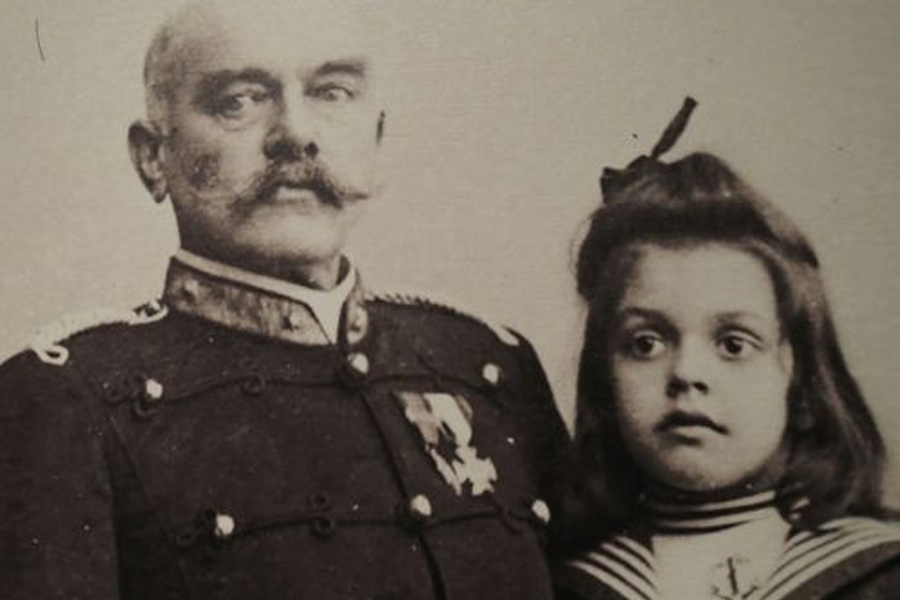
He is pictured with his father when he was a toddler. Additionally, historical collections affiliated with museums have preserved his tomb and memorial.
These brief excerpts let contemporary readers keep in mind that common family tales full of happiness, hope, and heartache lie behind well-known historical characters.
Even though Norman only lived for 880 days, his life was weaved into one of the most talked-about family stories in history.
FAQ
Who was Norman john Macleod?
Norman john Macleod was the son of Margaretha Geertruida Zelle, later known as Mata Hari, and Dutch colonial army Captain Rudolf “John” MacLeod. He was born on January 30, 1897, and died in late June 1899 at approximately two and a half years of age.
Who were Norman john Macleod’s parents?
His parents were Margaretha Geertruida Zelle, who later became famous as Mata Hari, and Captain Rudolf “John” MacLeod of the Dutch colonial army.
Did Norman john Macleod have any siblings?
Yes. He had one younger sister named Louise Jeanne MacLeod, often called Non or Nonnie. She survived the illness that claimed Norman’s life but died in 1919 at the age of 21.
What caused Norman john Macleod’s death?
Most historical accounts attribute his death to complications associated with congenital syphilis and the limited medical treatments available at the time. Rumors of poisoning appeared later but remain unproven.
Where did Norman john Macleod spend his life?
He spent nearly all of his short life in the Dutch East Indies after traveling there with his parents in 1897.
Who were Norman john Macleod’s grandparents?
His maternal grandparents were Adam Zelle and Antje van der Meulen. They were the parents of Margaretha Geertruida Zelle.
Who were Norman john Macleod’s maternal uncles?
His maternal uncles were Johannes Henderikus Zelle, Arie Zelle, and Cornelis Coenrad Zelle. Historical records contain very little information about their direct involvement in his life.
Why is Norman john Macleod remembered today?
Norman is remembered primarily because he was the son of Mata Hari. His brief life, tragic death, and place within a family marked by extraordinary fame and personal hardship continue to interest historians and readers alike.